

Babek Chalabi
Download PDF
Mar 25 2025
1
viewsasifsandhu/ShutterstockIrans influence across the Middle East has long depended on a network of allied militias and proxy forces known as the Axis of Resistance across countries like Iraq, Lebanon, Syria, and Yemen. Since 1979 Iran has gradually built, and used, this network to project power and oppose Israel and the United States. However, recent upheavals have led observers to point to aweakening of Irans regional proxies, raising questions about Irans strategic depth and deterrence, and even suggesting Iranhas largely lost control of two of those four Arab capitals.
Weakening Regional Proxies
For decades, Irans proxy militias have been the linchpin of its regional strategy, extending Irans strategic reach and creating a buffer against direct conflicts on Iranian soil. These proxy forces notably Hezbollah in Lebanon, Hamas in Gaza/Palestine thePopular Mobilization Forces (PMF)in Iraq and the Houthi movement in Yemen formed aring of firearound Irans adversaries. By arming and funding these groups, Iran soughtstrategic depthbeyond its borders, allowing it to confront foes via allied fighters rather than regular Iranian forces. In effect the proxies acted as bothswords and shields: a sword to strike Irans enemies and a shield to absorb attacks or deter them from reaching Iran proper.
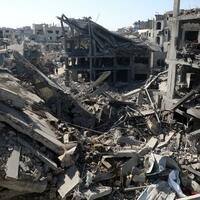
Recent conflicts have severely degraded this proxy network,dramatically shrinking Irans strategic depth. A chain reaction triggered by Hamass unprecedented attack on Israel on October 7, 2023 led to a multifront war that put Irans allies on the defensive. Israel responded by launching massive military operations that buried Gaza under rubble anddegraded Irans regionwide network of nonstate proxies. According to an analysis by the International Crisis Group Israels offensive not only devastated Hamas in Gaza but also struck Hezbollah in Lebanon and even Tehrans own defenses fundamentally altering the regional balance. By late 2024, Irans position had deteriorated to the point that ithas largely lost control of two of those four Arab capitalsit once dominated.
Hezbollah has long been Irans most powerful proxy, providing Tehran with a militant presence on Israels border. In the recent war scenario, however, Hezbollah suffered unprecedented losses. Foreign Policy reports that Israels campaign decimated Hezbollahs leadership and capabilities, forcing the group into ahumiliating ceasefireunder UN Resolution 1701 that could even require Hezbollahs disarmament. One senior analyst noted that Hezbollah has been reduced in such a way that it will take years to rebuild to the point that it can provide deterrence for Iran, transforming it from a strategic asset into astrategic liability. The weakening of Hezbollah means Irans influence in Beirut and its ability to threaten Israel from the north have diminished sharply.
Tehrans ties to Hamas in Gaza (a Sunni Islamist movement) have fluctuated, but in recent years Iran supported Hamas as part of the resistance axis against Israel. The October 2023 Hamas offensive and the ensuing Israeli response proved ruinous for Hamas. By the end,Hamas is not an asset for Iran anymore, and likely never will be again, according to one analysis. Hamassmilitary infrastructurewas shattered and its longtime leaders were killed or neutralized. With Gaza in ruins and under stricter Israeli/security control, Iran has lost a key lever of pressure against Israels southern flank. The collapse of Hamas as a fighting force not only erodes Irans strategic depth vis--vis Israel but also undercuts Tehrans narrative of leading the Palestinian resistance.
In Iraq, Iran cultivated numerous Shia militias (under the PMF umbrella) as proxies to wield influence and counter US/Sunni forces. These groups gave Iran tremendous sway in Baghdads politics and security. However, pressures are mounting inIraq as well. USdeterrence and Iraqi nationalist pushback have curbed militia aggression recently. By late 2024, Iran-backed militias like Kataib Hezbollah became conspicuously quiet after years of rocket and drone attacks apparentlyfearful of drawing Washingtons ire. Analysts now warn that Tehrans dominance in Iraq could slip:Iran may even lose Iraq, an outcome once unthinkable. If Baghdads government further asserts independence or if a strong Arab nationalist trend (as seen with cleric Moqtada al-Sadrs movement) rises, that would potentially sever a critical economic and logistical lifeline for Tehran.
The Houthi militia in Yemens civil war is another Iranian-aligned force, viewed by Iran as part of itsfour capitalsof influence. The Houthis drew Iranian support as a means to pressure Saudi Arabia (through cross-border missiles and the threat to Red Sea shipping lanes). However, the Houthis position may be shifting. A regional dtente between Iran and Saudi Arabia in 2023, and ongoing peace talks in Yemen, have reduced Houthi-Saudi hostilities. The Foreign Affairs analysis suggested that by 2025 Iran faces thecollapse of key proxiespotentially the Houthis in Yemen. Even if the Houthis remain in control of northern Yemen, a stable peace will likely diminish Irans ability to use them as an active proxy against Riyadh. In short Tehrans influence in Yemen could be curtailed removing yet another piece of its strategic depth in the Arabian Peninsula.
The loss or weakening of these proxies strips Iran of much of its buffer and forward presence in the region. IransAxis of Resistancehas been dealt a series of blows from Gaza to Beirut to Damascus that upend the regional order . Notably, the fall of Damascus from Irans orbit (with a Turkiye-backed rebellion toppling the Assad regime, according to the scenario) would be a devastating strategic loss ending Irans foothold in the Levant and cutting the land bridge to Hezbollah. Tehran now fears losing Baghdads allegiance as well, which wouldbe a disasterwith consequences inside Iran. In summary, Irans strategic depth is shrinking. Instead of confronting adversaries via proxies in far-off locales like South Lebanon or Yemen, Iran could find conflicts creeping closer to its own borders.
Irans Vulnerability Without Proxies
Irans reliance on proxy militias has been a cornerstone of its deterrence strategy. By having loyal forces positioned around Israel and US interests Iran could threaten retaliation indirectly thereby deterring attacks on itself. As one report notes,by utilizing local proxies, states [like Iran] gain a combative edge and distance themselves from the political blowback of direct wars. Proxies have served as Iranssword and shield, allowing Tehran to hit enemies (the sword) while shielding Iran from direct retribution. If Israel struck Iran, Hezbollah could rain rockets on Israeli cities; if Saudi Arabia confronted Iran, the Houthis could launch missiles at Riyadh; if US forces pressured Iran, Iraqi militias could attack US bases. This forward defense doctrine meant any attack on Iran risked igniting multiple proxy fronts a strong disincentive to Irans foes.
With those proxies now neutralized or diminished, Irans deterrence has been severely compromised.The recent conflict demonstrated this vividly. With Hezbollah and Hamas tied down or destroyed, Israel was exposing Tehran to direct attack. TheHoover Institution analysisby Bernard Haykel describes how Israel effectively neutralized Irans non-state actors, whichexposed [Iran] to direct attacksomething Iran had long sought to avoid. Indeed, in late 2024 Iran itself launched direct missile and drone strikes against Israel (on April 13 and October 1, 2024), a stark departure from its usual practice of acting throughproxies. These direct attacks, likely a response to having no proxies left to do the job, ended up backfiring: they caused minimal damage, thanks to US and Israeli air defenses, andinvited punishing Israeli retaliation. Israeli strikesdestroyed significant portions of Irans air defenses and ballistic missile production facilitiesin response. In other words, without proxies to carry out asymmetric warfare Iran found itself openly engaging a far superior military and suffering direct blows to its homeland defenses.
This scenario underscores Irans newfound vulnerability to external military pressure. Both theUnited States and Israelperceive Iran as weaker today than it has been in decades. In January 2025, thenUS President Joe Biden remarked that Iran is weaker than its been in decades, and Israeli leaders appeared to consider exploiting Iranstenuous positionwith possible strikes on its nuclear sites. With Irans proxy deterrent eroded, Israeli policymakers have grown bolder for the first time, regime change in Tehran has emerged as an explicit goal ofIsraeli state policy. This is a dramatic shift; Israel historically focused on tactical rollback of Irans influence, but now, seeing Irans regional position crumbling and its defenses breached, some in Israel aim to press the advantage all the way to topple the Iranian regime.
From Tehrans perspective, losing its proxy shield means that its adversaries (Israel, Saudi Arabia, the US and Gulf allies) have far fewer constraints on attacking Iran or squeezing it militarily. Irans leaders have openlycalled for modifying the countrys nuclear doctrine in the event of an existential threat, flirting with weapons development as a last-resort deterrent. In other words, as its conventional deterrence via proxies wanes, Iran may double down on obtaining a nuclear deterrent. Hawks in Tehran argue that only an explicit nuclear weapons capability could prevent a foreign attack when proxies can no longer do so. This raises the stakes: a weakened Iran, feeling cornered, might accelerate nuclear brinkmanship, which could in turn invite preemptive strikes from Israel a very dangerous spiral.
Iran is also more exposed to regional isolation and encirclement. The partial dtente with Saudi Arabia in 2023 may not hold if Iran is perceived as weak; Gulf states could align even more closely with Israel or the US to contain Tehran. Already,escalating tensions with Gulf states, Israel, and Western powers compound Irans isolation, as one comparison notes. If Iraq (the one neighboring country where Iran still wields decisive influence) slips away from Tehrans orbit, Iran will find itself largelysurrounded by hostile or uncooperative states. The Soviet Unions late Cold War experience is instructive here: As Moscows satellite states in Eastern Europe broke free in 1989, the USSR suddenly became cornered and vulnerable losing its buffer and facing a unified Western bloc a key factor that hastened its collapse. Similarly Irans loss of allies would leave it with little strategic depth or diplomatic cover.
The collapse of Irans proxy network sharply increases Irans strategic exposure. Tehran can no longer count on Hezbollahs rockets or Houthi drones to deter its enemies. Its deterrence doctrine must shift toward other means whether through its own missile force cyber warfare, or a potential nuclear deterrent all of which carry higher risks of direct confrontation. The likelihood of external military pressure on Iran (be it Israeli air strikes, tougher US naval patrols in the Gulf or less restraint by Saudi Arabia) grows when Irans proxies are out of the equation. This external vulnerability feeds into Irans internal situation, as the regime feels ever more pressure to demonstrate strength or adaptability to survive.
Domestic Fallout
Risks to Irans regional proxies have major implications as they are critical assets not only socially, but not least for regime security, which in turn affect Iransforeign policy agenda. Tehran has invested considerable economic resources and ideologicalcommitment to maintain its regional ambitions. Therefore, external crises threaten to exacerbate Irans already fragile economic situation,give rise to public discontent, and deepen divisions among political elites. This combination of economic hardship social unrest and internal factional rifts presents a significant challenge to the domestic governanceand strategic coherence of the Islamic Republic.
Maintaining proxy wars and foreign adventures has been costly for Irans economy and losing those investments yields no return. Tehran spent billions supporting Syrias Assad arming Hezbollah and Hamas, and funding militias, even as ordinary Iranians at home grappled with inflation and joblessness. Now with proxies either defeated or in retreat Iran faces the worst of both worlds: it expended resources on allies that can no longer advance its interests and it must bear new costs directly if it hopes to rebuild deterrence or respond to threats. This comes at a time when Irans economy is already in dire straits. According toIranian reports, between January 2024 and January 2025, the Iranian rial lost 62% of its value, while inflation averaged around 32%. Essential goods have sky-rocketed in price, squeezing households. US-led sanctions remain in place and could even intensify if Iran is seen as vulnerable, limiting Irans oil exports and access to revenue.
Irans proxy network had become a partial economic lifeline in the face of sanctions especially through Iraq. Iran has been effectively extracting resources from Iraqs economy to subsidize its own needs and fund proxies. Iraq, with its large oil output unhampered by sanctions, turned into Tehrans cash cow. AsEuronews reports, Irans Revolutionary Guard and its Quds Force do in Iraq what the East India Company once did in India plundering wealth to finance an empire. Iran benefits from schemes like smuggling its sanctioned oil via Iraq (disguised as Iraqi oil) and having militias steal Iraqi oil or win inflated contracts. Iraqi militias even secured$3 billion annuallyfrom Iraqs state budget (officially to pay 250,000 fighters in the PMF), and much of that money is siphoned to activities benefiting Tehrans agenda rather than Iraqs security. In essence, Iran has propped up parts of its economy by exploiting Iraq using Iraqi energy purchases, illicit trade, and proxy-controlled businesses to gain hard currency.
If Irans influence in Iraq is curtailed (for example, by a more assertive Iraqi nationalism or US pressure to sever Baghdads economic ties to Tehran), the Iranian regime would suffer an acute financial shock. One analysis argues that Washington should seize the opportunity of weakened Iranian proxies to permanently reduce Tehrans sway in Iraq not via invasion but through tough diplomacy sanctions threats, and intelligence operations. Such steps, it notes would not only cut off Irans vital financial resources but also give the U.S. leverage in nuclear talks. Indeed, the US under a renewed sanctions push in early 2025 stopped Iraqs waiver to import Iranian electricity, aiming to choke a key income source for Tehran. Losing Iraqs economic support would greatly worsen Irans cash crunch and limit its ability to provide basic services at home. The Iranian government is already struggling to pay salaries and fund subsidies; further cut-offs could force austerity that fuels more social anger.
Additionally, Iran now has to consider spending more on its own military, since proxies can no longer shoulder the load. Rebuilding air defenses and missile sites destroyed by Israel, for instance, or bolstering border security, will require diverting funds that might otherwise go to public needs. The IRGC (Islamic Revolutionary Guard Corps) may demand a larger share of a shrinking budget to compensate for lost proxy capabilities. This comes at a time when the regimes budget is strained by subsidy commitments and a weak private sector. Economic mismanagement and corruption (often tied to the hardline security establishment itself) compound the problem. The result is a potentially self-reinforcing cycle wherein economic pressures undermine the regimes patronage networks and reduce its capacity to placate the population consequently amplifying public resentment and social instability.
Domestically, Irans regional interventions have proven to be a double-edged sword simultaneously projecting power abroad while risking legitimacy at home. The regime portrays its support for groups like Hezbollah and Hamas as a noble resistance against Zionism and imperialism hoping to rally Islamist and nationalist sentiment at home. To a segment of the Iranian population particularly hardline loyalists these foreign campaigns were a source of pride and ideological legitimacy. However many other Iranians resent the regimes priorities, encapsulated in the common protest sloganNo to Gaza, No to Lebanon, I give my life only for Iran, which has been heard in street demonstrations. They view the proxy wars as a waste of national wealth and a cause of Irans international isolation. Now that the Axis of Resistance appears to be failing, even regime supporters might question the wisdom of these sacrifices. The aura of Iran as the vanguard of resistance is diminished when Hezbollah is forced into a ceasefire, Hamas is crushed and Assad has been ousted.
Crucially foreign policy setbacks can embolden domestic opposition. TheEuronewsanalysis explicitly notes that the defeat of Irans proxy groups and allies in two Arab countries has made the Islamic Republic look unsteady and boosted the morale of its opponents. Every domino that falls abroad be it a friendly government replaced by a hostile one, or a militia defeated sends a signal to Iranian society that the once-mighty regime is losing control. As the analysis states, from Tehrans view, losing influence in another Arab country especially one geographically and socially closer like Iraq would be a catastrophe and could have repercussions inside Iran. Iranians frequently travel to neighboring Iraq for pilgrimage and trade, and what happens in Iraq doesnt usually stay there. The Iranian regime fears that if it loses control over its neighbor, it will be more likely to lose control over its own people. In other words, failure abroad might ignite hope for change at home, acting as a catalyst for protest movements.
Iran has experienced major waves of unrest in recent years the nationwide protests of 2017-2018 (over economic grievances), late 2019 (sparked by a fuel price hike), and late 2022 (the Woman, Life, Freedom uprising after the death of Mahsa Amini, demanding social and political freedoms). Theseuprisingswere brutally suppressed, yet discontent simmers below the surface. The regimes willingness to use lethal force and mass arrests has kept it inpowerso far , but such tactics also breed long-term anger. If the public perceives the regime as weakened externally or humiliated by defeat, the fear barrier might lower further. Some Iranians may conclude thatthe regime is at a critical crossroads one misstep away from sudden collapse. Notably, the collapse of a key ally like Assad in Syria could inspire Iranian protesters by showing that even a decades-old dictatorship with a powerful security apparatus can fall under sufficient pressure.
There is also a psychological impact: The IRGC and Basij forces the backbone of domestic repression derive morale from the regimes revolutionary mission. If that mission (exporting the revolution, confronting Israel/US) seems to be failing, rank-and-file members might lose confidence or become less willing to crack down on fellow citizens. TheHoover Institution analysisobserved that across the Middle East, Iran and its proxies are increasingly viewed as paper tigers, and memes mocking Hezbollah leader Nasrallahs once-vaunted boasts have now proven empty. Such ridicule can puncture the aura of invincibility that authoritarian regimes try to project. Ideological disillusionment is growing Iranians see more clearly that the promised glory of resistance has yielded mostly isolation and hardship. This erosion of belief in the regimes core doctrine (vilayat-e faqih and resistance) is comparable to thelate USSRin the 1980s, when citizens stopped believing in communism, accelerating internalcollapse.
Within the Iranian establishment, the loss of proxies could intensify factional rivalries and blame-trading. The Islamic Republic is not monolithic; it comprises hardline clerics the Revolutionary Guard elite, pragmatic conservatives and marginalized reformists, among others. Setbacks abroad may weaken the position of those who champion aggressive regional policies (often the IRGC high command and ultraconservatives) giving an opening for critics to argue for a course correction. For instance, if supporting Hamas and Hezbollah led to costly wars that Iran ultimately lost, some officials might suggest focusing on domestic issues instead, or exploring diplomacy to reduce tensions. There could even be questioning of the Supreme Leaders decisions, since Ayatollah Khamenei has been the chief architect of the axis-of-resistance strategy.
On the other hand, hardliners may double down and scapegoat internal dissent for Irans troubles. The regime often blames unrest on foreign plots; conversely it may blame foreign failures on insufficient domestic unity or on infiltrators. This could lead to purges or power shifts within the regime. The Revolutionary Guard might push aside diplomats or moderates arguing that only a more militarized posture can save Iran now. Alternatively if Khameneis health is failing (he is in his mid-80s), the perception of regime weakness could trigger a succession struggle sooner rather than later. Various power centers theIRGC, Khameneis hardline inner circle (including his son Mojtaba), and some clergy are likely maneuvering to shape the post-Khamenei order. A crisis environment caused by proxy defeats could be the backdrop to that battle. Observers note that the IRGC will be the ultimatekingmakerin choosing Khameneis successor and its leaders favor a hardliner who will protect their interests. However, if the IRGC itself is discredited by external failures or splits over how to respond, the cohesion of the elite could break down.
In summary domestic pressures on Iran are mounting as its external defenses falter. Economic lifelines are fraying, public patience is wearing thin under inflation and repression and the leadership faces a legitimacy crisis. The convergence of economic strain, geopolitical isolation, and ideological disillusionment today mirrors the conditions that preceded theSoviet Unions collapsein 1991.In Iran, internal cracks in the economy, in popular consent, and even within the ruling class, are growing more visible as the external props of the regime are knocked away.
Scenarios for Irans Governance
Given this turbulent convergence of external and internal challenges, Iran stands at a crossroads. Multiple future trajectories are conceivable. Here we outline a few potential scenarios for Irans governance in the coming years, ranging from the endurance of the current regime (with some adjustments) to its collapse and replacement by a new system. In the case of regime change, a key question wouldbe what the new Iranian state would look like: a centralized democracy or a federalist model to reflect the countrys diverse ethnic composition.
Irans theocratic state has proven remarkably resilient through past turmoil (war with Iraq in the 1980s, sanctions, protests) by being adaptable when necessary. To weather the loss of its proxies, Tehrans leadership might recalibrate both its foreign and domestic policies. One possible adjustment is a strategic pivot inward de-emphasizing regional entanglements and focusing on stability at home. Faced with public anger over economic woes, the regime could attempt limited reforms: for instance, reducing spending on foreign militias, curbing corruption, or easing some social restrictions that irritate the populace. Indeed, after the2022 protestwave,Tehran showedsmall signs of compromise (such as debating changes to the morality police enforcement) though such steps have been halting). A major economic calamity could push Iran again toward seeking diplomacy to relieve the sanctions, and the regimewould see rejoining a nuclear agreement or fixing relations with Gulf neighbors as a crucial part of stabilizing the countrys economy. The recent China-brokered reconciliation with Saudi Arabia in 2023 indicates the regimes pragmatic streak when pressure mountsTehranagreed to re-establish ties with Riyadh after years of hostility, partly to reduce regional isolation and attract investment.
On the security front a surviving regime would likely lean more toward its missile program and cyber capabilities to compensate for lost proxy influence. Iran could invest heavily in longer-range missiles and drones and even pursue nuclear latency as a form of deterrence. Internally theIRGCs rolein politics might grow even larger it may essentially run a wartime economy and crack down harder on dissent, arguing that national survival is at stake. Some analysts have likened this potential path to a garrison state mentality, where the military-security apparatus tightens its grip as the society comes under stress. The risk is that such repression without substantive reform could fuel more opposition in the long run.
Another aspect of adjustment could be personnel change at the top without systemic change. For example, Supreme Leader Khamenei, if he lives through the crisis, might anoint a new figurehead president or make policy changes to placate critics.Alternatively, the regime might rally around a new Supreme Leader when the position becomes vacant who would present a fresh face but largely maintain the system, perhaps with a rhetoric of renewal. The continuity scenario, in essence, is one where the Islamic Republic remains intact no revolution occurs but it undergoes pragmatic shifts to mitigate the loss of proxies and to reduce the multifaceted pressures it faces. Historical precedent: the regimes behavior after the Iran-Iraq war in 1988 offers an example Imam Khomeini unexpectedly accepted a U.N. ceasefire (drinking the poison cup, as he said) when military victory proved impossible, thereby preserving the regime. Similarly Irans leaders today might swallow some bitter compromises like curbing regional aspirations tolerating some dissent at home or pursuing gestures thatmight have once been viewed as blasphemous to protect their grip on power.
A more dramatic scenario is the collapse of the current regime under the weight of its crises. In this outcome Irans theocratic government led by the Supreme Leader and Revolutionary Guard would fall, either through a popular uprising, an internal coup, or a combination of both. The simultaneous convergence of severe economic downturn, emboldened mass protests, and the loss of regime legitimacy could reach a tipping point where the security forces can no longer contain the situation. For instance, if protests in Tehran swell into the millions and segments of the police or military defect to the people (as happened in the 1979 Revolution), the Islamic Republics structure could rapidly unravel. External factors might accelerate this: a military confrontation that Iran loses badly could shatter the regimes prestige, or targeted sanctions (like cutting off Iranian oil sales completely) could send the economy into hyperinflation, sparking unrest that spirals out of control.
Analysts caution that fullregime collapse, while possible, is difficult to predict and the least likely scenario in the near term absent a trigger. The Iranian regime has extensive repressive tools and still retains some loyal support base. However, if it did collapse, what comes next is uncharted territory not seen in Iran in over four decades. We can expect an unstable transition period. Likely, there would be an interim authority perhaps a coalition of opposition figures, dissident insiders, and elements of the old establishment who switch sides at the last moment. The opposition in the diaspora and inside Iran have discussed ideas for a transitional council that could guide the country to a new system. Exiled PrinceReza Pahlavi, for example, has indicated a willingness to be part of a transition (not as a monarch, but as a facilitator for a republic chosen by the people). Opposition groups have even signed a Mahsa Charter in early 2023, agreeing on minimal common goals such as secular democracy and human rights, while leaving the exact form of government (monarchy vs. republic, federal vs. unitary) to be decided by referendum.
A key challenge in a post-regime transition would be maintaining order and preventing fragmentation. The immediate aftermath of the collapse could see chaos: armed IRGC units might refuse to surrender various protest movements ethnic regions might assert autonomy, and there could be score-settling. To avoid a security vacuum, any transitional government would need to quickly establish control over weapons and borders possibly with the help of elements of the regular army (Artesh), which stayed more neutral during the Islamic Republic era. International actors might also get involved: for instance, the U.N. or a contact group of nations could assist in stabilizing and providing economic relief to a post-theocratic Iran, much as Eastern European countries got Western aid after communism fell.
Historically, when authoritarian regimes collapse, the aftermath can range from smooth democratization (e.g., Eastern Europe 198990) to protracted civil strife (e.g., the collapse of Yugoslavia). Irans outcome would depend on how cohesive and visionary the transitional leadership is. If moderate voices and technocrats manage to guide the process, Iran could hold a referendum or assembly to decide a new constitution within a year or two of the old regimes fall. If, however, factions splinter say, monarchists versus republicans, or Persians versus ethnic minorities, or Islamist hardliners trying to stage a counter-coup then Irans transition could be very turbulent.
One of the most debated questions among Iranian opposition and activists is whether a future democratic Iran should be a centralized state or a federal one. Iran is a diverse country with Persians, Turkish (Azerbaijani), Kurds, Arabs, Baloch, Turkmen and other groups. Under both the Pahlavi dynasty and the Islamic Republic the state has been unitary and highly centralized, often suppressing ethnic autonomy movements. This has left minority regions feeling marginalized and some ethnic activists call for federalism as a solution to ensure self-governance and cultural rights. Thefederalism vs centralismdebate has become one of the most divisive issues among activists planning for Irans future.
Federalism proponents argue that giving provinces or ethnic regions a degree of self-rule would actually preserve Irans national unity in the long run. They point to successful multi-ethnic federations like India, Canada, or the United States, which have not disintegrated and in fact prospered with federal structures. Iranian federalists contend that decades of centralized rule have failed to deliver development to Irans periphery border provinces remain poor and resentful. They also note that in Irans history, especially under ancient empires, local governance was often practiced. Culturally, federalism could allow the use of local languages (e.g., Azerbaijani Turkic, Kurdish, Arabic) in education and administration, addressing a long-held grievance of minorities. Advocates like Kurdish leaderAbdullah Mohtadiurged at a 2023 conference: I would like the opposition charter to explicitly recognize federalism. Even former reformist President Mohammad Khatami once astonished observers by musing that the best way to govern is a federal government, but our constitution doesnt allow it a sign that even some insiders realize the centralist model is under strain.
Federalism opponents, however, fear that it could lead to national disintegration and conflict. They argue that Irans strong sense of nationhood would be undermined by dividing power along ethnic lines. One common refrain is that ethnic-based federalism would be a fascistic regression that balkanizes the country and could trigger years of civil war, as one activist tweeted. They note that many minority militants in Iran are openly secessionist; given an opening, some provinces might push not just for autonomy but full independence. Critics also point out that Iran has no recent experience with federalism implementing it suddenly could be chaotic in a society used to centralized rule. They suggest that decentralization can be achieved in other ways, for example through stronger elected city and provincial councils, without creating ethnic states. Some opposition figures, especially in the monarchist camp, are staunchly against federalism, seeing it as a plot to break Iran apart (they often recall Western plans in the 20th century to carve up Iran). These folks advocate a unitary republic or restored constitutional monarchy where minority rights are protected by law but not by devolving power territorially. They rally around slogans like We are one nation, the Iranian nation and prefer the model of a strong central government with equal citizen rights.
The compromise position emerging in some opposition dialogues is to have adecentralized unitary statesomething akin to Spain or maybe less formal federalism. This would mean robust local governance and cultural rights, without explicitly drawing internal borders on ethnic lines. As one commentator framed it: Yes to political [decentralization] and no to ethnicity-defined federalism. Yes to an American-style, no to a Yugoslavian-style [system]. This view suggests Iran could adopt administrative federal units (provinces or states) that are geographic and mixed rather than purely ethnic enclaves thus avoiding sectarian partition while still devolving power. The debate remains unresolved, and ultimately, if the regime fails the decision would likely be made by a nationwide referendum or constituent assembly. All major opposition figures have agreed that the Iranian people must choose their system via a free vote. The diaspora Mahsa Charter deliberately did not pick a side on the federal vs. unitary question precisely to keep the broad coalition together and leave the matter to democratic processes.
Whatever model is chosen, ensuring minority rights and preventing ethnic conflict will be a priority in a post-regime Iran. The experience of Iraq is instructive: after Saddam Husseins fall, Iraq adopted a federal system recognizing the Kurdistan Region. This arrangement has had challenges and tensions with Baghdad, but it arguably kept the country together by accommodating Kurdish self-rule. Iran may look to that example (many Iranian Kurds envy the autonomy Iraqi Kurds have). Conversely, Iran will want to avoid outcomes like Syria or Yugoslavia, where state collapse led to ethnic bloodshed. The presence of various groups and neighboring powers (Turkiye, for example, would worry about Iranian Kurdish autonomy fueling its own Kurdish issues) will make this a delicate balance. With appropriate safeguards, federalismcould provide a stabilizing olution. However, it could also result in destabilization if its not handled well hence the heated debate amongsupporters and critics.
Lessons and Historical Analogues
Irans current trajectory reflects patterns emerging from other historical precedents. First, in the late 1980s, the USSR saw its proxy empire in Eastern Europe crumble one country after another. As theHoover Institutionnotes, Moscows grand strategy collapsed with a whimper, as the Soviet system imploded under its own contradictions. The revolutions in Poland, East Germany, etc.,Geopoliticalisolation set in as the Warsaw Pact disintegrated and Soviet troops withdrew in defeat from Afghanistan. Meanwhile, the Soviet economy was in crisis, and the public lost faith in communist ideology. Ultimately the internal cracks economic breakdown and popular discontent brought the Soviet regime down, once its external empire was gone. Irans situation in 2025 is often compared to the USSR in 1989: escalating economic hardships, loss of regional influence, and growing public disillusionment are common to both. The Soviet case suggests that when an expansionist regime loses its satellite allies it can rapidly lose coherence at home as well. However, it also shows that a peaceful transition is possible the USSRs collapse, while causing hardship, led to newly independent states and the end of the Cold War. The key lesson is that converging pressures (failing economy, isolation, ideology collapse) can overwhelm even a mighty authoritarian regime, and Irans leadership is undoubtedly aware of that precedent.
Iraq under Saddam Hussein offers another instructive example. Saddam had tried to project power regionally (invading Iran in 1980, then Kuwait in 1990) and supported Palestinian militants (paying families of suicide bombers) a sort of proto-proxy strategy. After the Gulf War, Iraq lost its influence and was put under sanctions. Saddams regime survived another 12 years but in a severely weakened state. Internally, Iraq in the 1990s saw economic collapse (oil-for-food program), Shia and Kurdish uprisings that were brutally put down, and Saddams circle grew ever narrower. Ultimately, an US invasion in 2003 toppled him, but by then the regime was brittle. The Iraq case shows that a regime can limp on for years after losing regional wars, but it may be hollowed out and prone to sudden overthrow. It also illustrates the consequences of regime collapse: Iraq descended into chaos and insurgency after 2003, something Iran would want to avoid. For Iran, avoiding Saddams obstinacy (he refused reforms and clung to power until externally removed) might be wise perhaps a negotiated exit or transformation could spare Iran the chaos Iraq experienced.
In Egypt, Gamal Abdel Nasser in the 1950s-60s, like Irans leaders, led an ideological regional movement (pan-Arabism) and engaged in proxy wars (e.g., deploying Egyptian troops to Yemen in the 1960s). Nasser vowed to destroy Israel but was defeated in theSix-Day Warof 1967, a failure that shattered his grand project. While Nasser did not lose power immediately (he stayed on until his death in 1970), his aura was damaged. His successor, Anwar Sadat, took Egypt on a very different path expelling Soviet advisors, making peace with Israel in 1979, and focusing on the Egyptian economy. This pivot was effectively an admission that the era of costly foreign entanglements was over for Egypt. By analogy, Irans leadership after a proxy failure might either dig in (as Nasser tried briefly) or pivot (as Sadat did). If a more pragmatic leadership faction gains influence in Tehran, we could see an Iranian Sadat moment perhaps seeking dtente with the West or Israel to rebuild the country. The trade-off, as with Sadat, is that hardliners will resist (Sadat was assassinated in 1981 by Islamists who saw the peace with Israel as treason). Iran could face internal violence if parts of the revolutionary establishment feel betrayed by any reconciliation with enemies.
Though a different context, South Africas apartheid regime faced simultaneous external and internal pressure that forced change. In the 1980s, under sanctions and fighting proxy conflicts in neighboring countries (Angola, Namibia) against Soviet-backed forces, Pretoria was increasingly isolated. Internally, unrest and international opprobrium grew. By 1990, the apartheid regime chose a negotiated transition freeing Nelson Mandela, legalizing the ANC, and withdrawing from Namibia leading to a democratic government by 1994. This example shows a regime proactively negotiating its exit can prevent civil war and even earn some guarantees. If Irans rulers conclude that their position is untenable they might (though its a slim possibility) choose to negotiate a gradual transition of power or major reforms to avoid a total collapse scenario. This would be akin to a soft landing, preserving some of their interests. However, Irans ideology and power structure might make such a voluntary transition harder than it was in South Africa.
When Muammar Gaddafis regime fell during the Arab Spring with NATO intervention in 2011, Libya plunged into instability. Gaddafi, like Irans regime, had sponsored proxies/alliances in Africa and the Middle East. Once he fell, those ties dissolved, and Libya itself fragmented into rival militia zones. This is a cautionary tale: a sudden regime implosion in a heavily armed society can lead to a power vacuum. For Iran, where the IRGC controls significant weaponry and there are various armed groups (e.g., ethnic militants like Kurdish Peshmerga or even criminal smuggling networks), a post-regime security vacuum could be perilous. Planning for disarmament and integration of fighters (perhaps through a national guard or army reform) would be critical in a transition to avoid a Libya-like fate.
In comparing these historical cases, one finds that losing proxy wars or external influence often presages internal change, but the nature of that change varies widely. Some states managed a controlled transition (South Africa), while others collapsed violently (the USSR was peaceful internally, but Yugoslavia was violent; Iraq and Libya were violent due to external wars). A common thread is that ideological regimes often face their legitimacy crumbling when their grand projects fail abroad the external empire implodes, and shortly thereafter, the internal empire does too. Irans leadership might study these and attempt a softer landing than, say, Ceauescus Romania which ended in the dictators execution. Much hinges on the response of Irans military and security forces at a decisive moment specifically whether they persist in violently suppressing protesters or instead negotiate to secure influence within an emerging political structure.
Implications and Outlook
The weakening or dissolution of Irans proxy alliances, whether from military reversals, politicalrealignments or diplomatic accord, would be a watershed event for the Islamic Republic. The collapse of TehransAxis of Resistancewould sharply reduce Irans strategic reach, leaving it militarilyvulnerable and largely isolated in a hostile neighborhood. Without the buffer of proxy forces, Iran would be exposed to direct strikes by its adversaries, a fact already evidenced by Israeli attacks on Iranian soil once Hezbollah and Hamas were neutralized. The deterrence equation that long protected Iran is being upended, potentially drivingTehranto dangerous lengths such as reconsidering a nuclear weapons option to compensate.
Internally the reverberations of proxy failure could shake the regimes foundations. Theeconomic lifeblood Tehranextracted from allies like Iraq may run dry exacerbating a financial crisis and popular misery. The regimes credibility, built on promises of ideological triumph abroad, will erode as those promises falter empowering dissidents and protesters who challenge why Irans youth must die in Syria or why Irans treasury funds foreign militias instead of the people at home. As history shows, when an expansionist authoritarian regime starts crumbling externally, internal collapse can follow with surprising speed as happened with theSoviet Unions implosionafter its satellite states broke away.
Yet, the coming years might see the embattled Islamic Republic clinging on through a mix of repression and reluctant reforms. Alternatively, we may witness a new revolution in Iran one in which Iranians, having lost faith in the old guard seek to build a new political order based on the ashes of the ayatollahs rule. In that event, one of the foremost questions will be how to structure the state to ensure stability, justice, and unity for Irans diverse society. The ongoing debate between federalism and a unitary system in opposition circles underscores that even among those who agree on ending clerical rule, the shape of thenext Iranis hotly contested.
The world should be prepared for various contingencies. A weakened Iran might lash out abroad or brutally crackdown at home to postpone its demise. Conversely, a post-theocratic Iran, if it emerges, will need considerable support economic aid integration into the international community, and perhaps peacekeeping assistance to rebuild and prevent regional destabilization. For regional and global powers, the stakes are high: Irans trajectory will influence conflicts from the Levant to the Gulf and impact everything from nuclear nonproliferation to energy markets. Policymakers would do well to study the lessons of past regime transitions and proxy wars. Asone analysisput it worsening economic conditions and any external military strike will further accelerate Irans decline, significantly reducing its chances of survival. Managing that decline to avoid chaos or perhaps to catalyze a peaceful transformation will be the challenge ahead.
Iran stands at a historic crossroads. The loss of its proxies could be either the blow that finally undermines the Islamic Republic or, conversely, a rudeawakening that sends it on a more moderate inward-looking trajectory. Either way, the Middle Eastern geopolitical landscapewould be profoundly changed. An Iran that is no longer able to project power via Hezbollah, Hamas, or other militias is an Iran fundamentally different from the one that has dominated regional security calculations for the past 40 years. Whether that new Iran becomes a constructive player or descends into turmoil will shape the Middle East for years to come. The coming chapter in Irans story reform, revolution, or something in between will be written about how Tehran handles the loss of the very proxies that once underwrote its ambition as a regional hegemon.
Further Reading on E-International Relations
- Opinion Iran at the Crossroads Pending Trumps Return
- With Hezbollahs Retaliation Strategy in Disarray, Israel and Iran Brace for War
- Opinion How Could Iran Survive Trumps Maximum Pressure 2.0?
- National Honor and Religious Duty: Irans Strategic Evolution in Confronting Israel
- From Arms to Ballots: The Politicization of Hezbollah and Hamas
- Opinion Iran 2020: Election Polls, Panics and Predictions
About The Author(s)
Babek Chalabiis a PhD student and the founder ofArazNews.orga platform dedicated to raising awareness about South Azerbaijani issues.
TagsHamasHezbollahIranYemen